✓ Key Results
Key results
>$1M/yr
Guaranteed Annual Utility Savings
1st U.S.
Juice Plant to Pasteurize with Hot Water
100%
Winter Building Heat from Recovered Energy
1 The Challenge
Design a new beverage plant around total energy performance
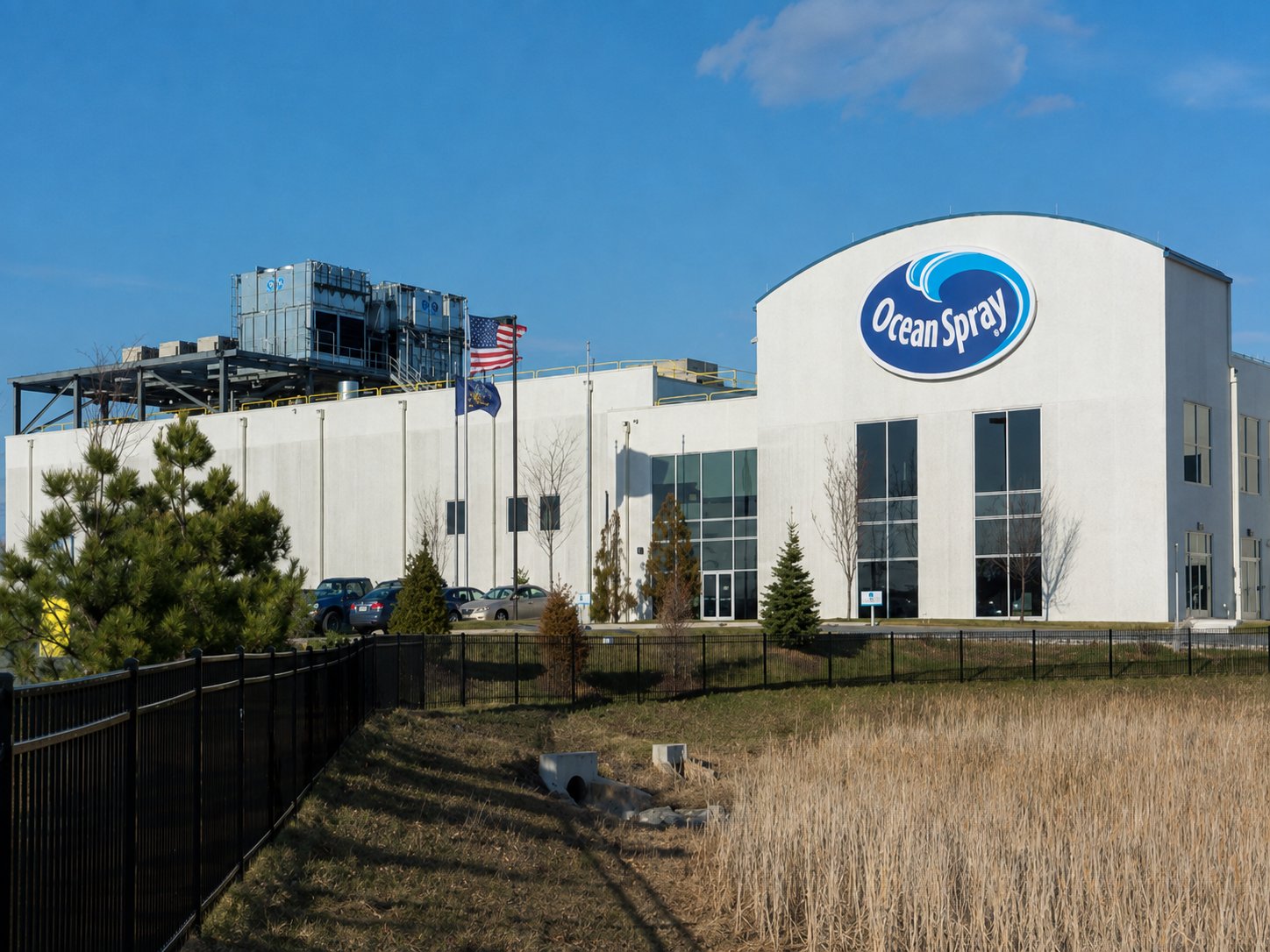
When Ocean Spray developed its new Lehigh Valley juice bottling facility, the goal was not simply efficient equipment but integrating process heating, cooling, HVAC and utility systems.
The conventional design relied on steam. WEI instead mapped the full thermal path through the juice process and facility — where energy could be delivered at lower temperatures, where heat was rejected, and where it could be reused.
2 WEI’s Approach
Replace steam with a closed-loop hot-water platform
WEI built an integrated energy model during construction and redesigned the utilities around a 230°F hot-water platform, cutting the penalty of generating and distributing steam while improving control, reliability and maintainability.
WEI supplied major energy equipment, developed sequences of operation, programmed controls and supported Check/Test/Start, commissioning, training and performance verification.
Core Solution
Hot water + heat recovery + positive-pressure HVAC
Rather than treating process and building loads separately, WEI linked the plant’s hot-water, cooling and HVAC systems so rejected process heat becomes a useful energy source elsewhere.
3 Recover the Heat
Use process rejection energy twice
The juice process heats product for pasteurization, then cools it before filling. WEI found that much of the energy normally rejected during cooling could be recovered instead.
Moderate-temperature recovered heat preheats juice, while lower-temperature tower-water heat feeds HVAC heating coils in season — heating the building with recovered rejection energy rather than purchased energy in winter.
Process Heat RecoveryCaptured, then reused
Heat rejected during bottle cooling is captured and reused to reduce the energy required for juice preheating.
Ductless Positive PressureLess air-moving energy
WEI’s HVAC strategy uses building pressurization and low-temperature recovered heat to condition the manufacturing space with less air-moving energy.
4 Controls & Verification
Keep the systems integrated after startup
WEI built the controls architecture and energy dashboard to integrate facility and process systems, compare actual performance with targets, and feed ongoing Monitoring & Verification.
Long-term performance is built into the model: engineer, commission, train operators, monitor, and use real data to find the next optimization.
5 Results
A first-of-its-kind hot-water beverage plant
Ocean Spray’s Lehigh Valley facility became the first U.S. juice plant to pasteurize with hot water instead of steam. Recovered rejection energy lets it use zero purchased energy for building heat in winter.
>$1M/yr
Guaranteed Annual Utility Savings
100%
Hot-Water Juice Pasteurization + HVAC Heating
100%
Winter Building Heat from Recovered Energy
It shows how food and beverage plants can cut purchased energy by designing process, utility plant, HVAC and controls as one connected thermal system.
6 Continuing the Work
From one facility to portfolio-wide energy strategy
WEI’s work with Ocean Spray continued beyond Lehigh Valley — ongoing monitoring and optimization, further heat-recovery evaluations at the plant, and a corporate emissions-reduction assessment across multiple facilities.
The same principle drives the work: understand where energy enters the process, where it is rejected, and how much can be recovered before buying more.
7 WEI Services
Integrated process and facility energy engineering
Energy Modeling & Feasibility Analysis
Process / Facility Thermal Integration
Hot-Water Utility System Design
Waste-Heat Recovery
Ductless Positive-Pressure HVAC
Controls & Energy Dashboard
Equipment Procurement & Integration
Check / Test / Start (CTS)
Commissioning & Training
Monitoring & Verification